ESTABLISHED 2010 - Beyond The Campfire was created to encourage readers to explore the great outdoors and to observe it close up. Get out and take a hike, go fishing or canoeing, or simply stretch out on a blanket under a summer sky...and take your camera along. We'll talk about combining outdoor activities with photography. We'll look at everything from improving your understanding of the basics of photography to more advanced techniques including things like how to see photographically and capturing the light. We'll explore the night sky, location shoots, using off camera speedlights along with nature and landscape. Grab your camera...strap on your hiking boots...and join me. I think you will enjoy the adventure.

Tuesday, August 7, 2012

Hitting the Wall…A Thru the Lens look at Life

Homeless woman's hands

Back in the early 1990’s, while still in my relatively young 40’s, for some crazy reason I thought I needed to get involved in competing in Triathlons.  Seemed like a good idea at the time and indeed there was a measure of fun and accomplishment associated with it…it was also a lot of hard work.  Compete is hardly the correct word to use in my case…simply to finish was accomplishment enough for me and to do that required a lot of training in three athletic disciplines…swimming, bicycling, and running.  The running part I knew better than the other two as up until then, I had been involved in running activities off and on since junior high school …bicycling I took up somewhat later in life…well after college and well into my 30’s, mostly for recreation, but found it enjoyable and valuable as a fitness tool.  Swimming on the other hand I knew would be the most difficult activity to deal with.  Oh…I could swim pretty well having been a lifeguard back in my college days, but I was never a competitive swimmer and had to learn how to train for that event the hard way through trial and error…plus…half way into an open water one kilometer swim you can’t simply stop and pull off the road…so I had to place a major emphasis on that training aspect to avoid voiding my warranty by drowning.  Turns out, I really enjoyed swimming as a fitness sport more than the other two and continue doing so even today.

There was one particular race…actually it was a team event, where we had a swimmer, biker, and runner…I did the bike…where I learned what it meant to ‘hit the wall’.  The bike portion of the race was 60+ miles on a hilly course…5 laps around a 12 mile loop, plus an out and back connecting portion from the staging area to the course loop that added 2 or 3 extra miles.  

Seems I came down with a bad case of bronchitis a few days before the event that really took the wind out of my sails.  I managed to make the race and did ok for the first 50 miles or so averaging around 20mph…then…wham!  I hit the wall hard…nothing left in the tank physically, even less desire to continue…and I still had about 15 more miles to go.  That was the longest and hardest 15 miles I’ve ever endured on a bike in my life.  My average speed dropped from around 20 to below 15 and it was all I could do to finish.  Each hill climb became a test of wills…me against gravity…and gravity won most of the time. The main reason for the wall slamming me in the face the way it did was caused by a number of factors…over-training and lack of rest, which broke me down physically and so I got sick…and lack of proper hydration and fuel replacement during the race.  Although I finished my portion of the race…it was not pretty…but, I did finish…I didn’t quit even though I felt like it.  The one thing that kept me going was the encouraging words of others who lined the course..and when I climbed that last hill, to hear the cheers of the fans and friends helped to push me over the top.

Oh well…the point I want to make has nothing to do really with triathlons, but about hitting the wall and how it relates to life.  Sooner or later we all face circumstances that push us to the limit of our endurance…emotional, and in many cases even physical.  Many times, self inflicted wounds push us to that limit, but other times circumstances beyond our control just catch up with us.  Those are often the more difficult ones to deal with…you just feel disconnected and frustrated because of that lack of control.  The people I’ve admired the most over the years are the ones I’ve known who have endured through very trying and difficult circumstances.  None of us know for sure how we will react to adversity until we actually face that circumstance. Bravado spoken from the confines of a cushioned life carries little weight…yet humble perseverance when times are tough, speak loudly to those who witness it.  It’s been said, it’s not how many times you get knocked down that mattersit how many times you get back up that counts.  Facing hardship is a part of life…how you face it depends on your character.

My wife Kris and I have spent a lot of time talking to homeless people in our community…often providing donated blankets during the colder months to those who need them.  We’ve seen where self-inflicted or even worse, family inflicted wounds have all but destroyed some of them…they for the most part have given up and turn to alcohol and/or drugs. You can see it in their eyes.  Many are victims of circumstances.  Even so, we have also seen a great deal of resilience in many of them.  Even under difficult circumstances, they have retained their sense of humor and dignity.  Many of them keep hitting the wall over and over… continually getting knocked down…but more importantly, they get up again and again and carry on.  I’ve learned a lot about character and facing difficulties by simply listening to these people.  They amaze me with their stories.  Not so oddly, the one thing they crave most is to be touched…to shake someone’s hand…to receive and give back a hug…have someone acknowledge that their life has meaning and they are still relevant and important...not just in God’s eyes, but in our eyes.

Most of us have never really known what it’s like to hit the wall in real life…to run out of options…to have nothing left in the tank.  Taking the time to listen to someone who truly has…well, it can’t help but make me wonder how I would react if I truly found myself in that circumstance.  My meaningless ordeal of hitting the wall during that race was nothing more than a bad case of planning and fatigue...I knew all I had to do was stop, and it would all end.  Not so, for many of these homeless people...they can't just stop and expect it all to go away.

The winter season is not all that far away and I challenge you who read this to step away from your comfort zone for a while...talk to someone who may be down and out...homeless or otherwise.  Reach out your hand...offer a hug...give them a blanket or a meal...but most of all, give them part of yourself, because that is what they need as much as anything else...It is amazing how a simple act of kindness will lift the spirits of someone whose spirit may have hit the wall...doing so will not only help to carry them a little further, you just may discover that your own spirit is lifted as well.

Keith

Monday, July 30, 2012

Use the Vertical to Accent the Horizontal...

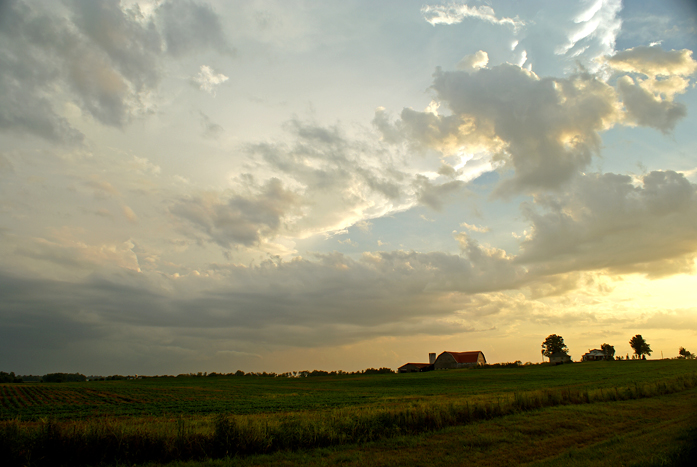
The ever constant Oklahoma wind flowed across the prairie like invisible waves...waves made apparent by the undulations of the tall grasses as they rolled in time with the tune of the wind.  I love first light on the prairie...it's a magical time that takes much longer than it might seem to materialize...and at the same time lasts but a fleeting moment and is gone before you realize its gone.  Photographing the prairie I've discovered, is far more difficult to accomplish than one might think.  How do you capture it's grandeur...the big sky and openness in a single shot?

The prairie by its nature is relatively flat and rolls across the landscape in undulating patterns that create, under the right conditions, shadows and textures...but those shadows and textures are for the most part isolated low to the ground and tend to blend with each other.  What one experiences visually while standing on a high knoll during first light is far from what is easily captured in a photograph.  Visually we can detect the subtle variations in the landscape and can feel the bigness of the sky as it arches above us.  A photograph can only capture a pseudo likeness of what is there.

One technique that I use to capture the essence of the prairie is to use the vertical to accent the horizontal.  What I mean by this is that by isolating something against the sky vertically, you enhance what is trapped below the horizontal line.  There are numerous ways to do this...one of the most common is to use clouds...especially those white fluffy summer clouds.

Clouds add depth to a flat sky...they also cast shadows across the landscape and add interest to what might otherwise be a bland composition.  Combine this with breaking the horizontal line with something vertical in the foreground composition and not only do you bring depth, but you bring life to the image.

The idea of using the vertical to accent the horizontal works in all kinds of situations...not just big sky open prairies.  Whenever you have a wide field of view by adding something on the horizon to break it up, you are taking advantage of the accent flavor.  


Turning you camera to a vertical orientation is another way to use this technique.  Knowing when to use a vertical orientation vs horizontal is a matter of personal taste really, but some subjects tend to work more effectively as a photograph in the vertical.  The idea in most cases is to isolate the subject against the sky or some other background.


One note...the horizon doesn't always have to be...the horizon.  Take the prairie for instance...being characterized by a rolling landscape you can use those rolls to you advantage by isolating your subject against a background with careful selection of angle and composition...much like the image at the top of the page.  Your horizon in essence becomes one of the rolls.

Using the vertical to accent the horizontal may seem like an ordinary approach to photography...even so, by making a conscious effort to visualize how the vertical can enhance a horizontal landscape...you will add another level of learning to your ability to see photographically.

Keith

Tuesday, July 24, 2012

Isolate What is Important

Several years ago as my youngest son was playing little league baseball, I watched him struggle game after game to hit the ball.  I could take him to batting cages and he would knock the cover off the ball...but in a game, he'd strike out time after time or he would barely make contact with the ball and get thrown out at first.  I just couldn't quite figure out why he had the ability to hit in the batting cages...even when the balls were being thrown all over the strike zone...but he could not seem to do so in a game.  It wasn't until sometime later that I began to realize what he was doing.  When he was in the batting cage, he would focus in on what was important...the ball...but in a game, he had a tendency to focus in on the field and not the ball...and so he would never watch the ball into the bat and swing wildly hoping to make contact.

Oddly enough, I see beginning photographers do the same kind of thing...they tend to see the field, but fail to focus on what is truly important...consequently, way to often they strike out in their photographs.  Successful photography includes many aspects, finding what is important and concentrating on it is one of the most important.  I've said it, and heard it said by others many times...your job as a photographer is to find order in the midst of the chaos....in other words...isolate what is important and simplify your composition.

Occasionally I'll run across a photograph that really catches my attention.  What usually does the trick is how the photographer was able to do just that, focus in the most important part of the composition.  Often, I'll find myself looking at the wrong part of the scene and attempting to capture something that just isn't there...just isn't working for some reason.  When that happens, if I change my focus...look more tightly at my surroundings, I will just as often discover the elements that were catching my attention to begin with, and an entirely new composition materializes.

So don't be afraid to tighten your focus...narrow the field of view and see the individual elements that make up the composition...concentrate on those and you just might begin to see the world from entirely new perspective...and when that happens, your photography will grow another step in the right direction.

Keith

Wednesday, July 18, 2012

Photographing what I see vs Creating what I visualize

One of the most challenging things that beginning photographers must overcome is to understand the camera’s reaction to light...Too often they see something they want to photograph…point their camera at the scene and fire away letting the camera make all the decisions…as a result, the results don’t always match what they experienced emotionally.  The impact of the moment just isn’t there in their images.  It becomes one of those…’Well, you had to be there..’ moments.

There are a number of reasons this happens, the most important one being that most average photographers believe the camera simply captures what they see the way they see it.  In reality, the camera doesn’t do that.  What they don’t understand is that the exposure controls built into the camera can’t distinguish between a blank white sheet and a blazing sunset.  It doesn’t’ know what it is looking at…it simply reads the intensity of the light that is filtering into its exposure sensors.

What the camera does is this:  Based on the light values it reads, it wants to take an average of those values and set an exposure that falls in the middle between the upper and lower end of the exposure values that would work for a given lighting situation.

So how does knowing this help me as a photographer?  This is where the visualization part comes into play.  I want to avoid getting too technical here for fear of frustrating and confusing those who may not grasp all the photographic nomenclature…so, let me describe a circumstance to illustrate what I am talking about.

Take for instance a beautiful Kentucky morning with pastel colors arching across the horizon and layers of fog hovering down in the valley…something like this shot.


 What you have here is a situation where the sky is very bright, yet the landscape and fog tends to remain somewhat dark.  Understanding how the camera will react to this kind of lighting situation is important to understanding how to capture it.  The idea here is not so much to capture what you see visually, but to capture what you are experiencing emotionally.    Most DSLR digital cameras can utilize at least three types of exposure metering:  Wide-Area Evaluative, Center Weighted, and Spot metering.  Let me briefly explain each of these.

Wide-Area Evaluative is designed to evaluate the lighting situation across the whole spectrum of available light in the scene…in other words it looks at pretty much the entire scene to evaluate the light intensity.  It is very effective in most situations.

Center Weighted does almost the same thing as WA Evaluative, except it places a higher value to the light it registers in the center area of the scene.

Spot Metering looks specifically at the light it registers in that center circle or square in the middle of your view finder…and ignores the rest of the scene. 

Remembering that the camera wants to move the exposure value to the center of the scale…what happens when you use Spot Metering and meter off the lower part of the sky?  Think about this for a moment.  If what you are seeing visually is lighter than a middle tone value, then the cameras metering will cause the exposure to slightly darken the image…in essence bringing that portion of the scene it is metering toward the middle of the scale…something like this:…  

  
Notice that the sky is a shade darker than the previous image because the previous image more closely resembles the actual visual brightness in the sky which was shifted toward the lighter end of the scale. 

If the sky at that point is darker than a middle tone value…then the camera brings the exposure value toward the middle…lightening the sky.  Something like this where the first image shows a dark sky and the second image shows the sky more toward the middle value.


If it was already near the middle value it would remain at the same value.

Put another way, if the sky is light…the camera wants to darken it…if the sky is dark…it will want to lighten it.  Both visual values are pushed toward the middle. Same thing applies to Center Weighted…the only difference is that the camera is looking at a wider spectrum of the scene to gather its light values.

When using Wide-Area Evaluative…any large dark area or light area will often skew the exposure setting and you might end up with skewed results.

This example is a simplified illustration of how the camera sees light.  So, how can you use this to your advantage?  It requires the ability to visualize the scene from the camera’s perspective…not so much what you are seeing visually.  Understanding how the camera will react to the light, you can then begin to think about how you want the image to look, and use the natural inclination of the camera to capture the light in a more moody and emotional way.

Let’s expand on this just a bit.  All DSLR digital cameras will have a function called Exposure Compensation…usually designated with EV or AV initials next to a button with a +/- inscribed on it…like the one you see below on the upper right toward the middle. 


If you look at the viewer on the back you will also see a scale on it with a 0 in the middle and expanding out with …+1…+2 to the right and -2…-1… on the left…like this;

-2…-1…0…+1…+2

When you press the +/- AV button, this scale is highlighted and using the finger wheel or control wheel on the back you move the cursor left or right to line up with the corresponding values on the scale.

This is one of the most useful and important functions on the camera.  The only button I use more often than this one is the shutter release button.  What it does is allows you to tell the camera to compensate up or down the exposure scale a certain amount above or below what it wants to automatically do.

Let’s take the same illustration we used previously.  Pretend the sky was a rather dark and moody reddish orange color and really captured your imagination.  Just looking at the sky, you realize that its color value on the scale falls below the neutral middle value.  If you allow the camera to do what it wants to do…what will happen?

Remember…it wants to move the exposure toward the middle…so that dark and moody sky will more than likely become a lighter shade than what you want it to be…often effectively changing the dynamics of the visual impression.  To get around that, you can tell the camera via the +/- compensation to keep the sky darker by dialing in a minus value…how much depends on just how far you want it to go…something between a -1/3 of a stop to a full -1 stop…by shooting a series of shots using different values you can bracket the images and then chose the best one later.

This is a very powerful function…and can be used to assign a color value to a particular portion of a scene by creatively using the various metering methods and experimenting.  After a while, it will become second nature to you and you will find yourself compensating before you fire the first shot…because now, you are beginning to visualize how the camera sees light…and using its capabilities to capture the scene, the way you want it to appear…not what the camera gives you…nor necessarily how it appears visually.

Okay...the point is to get you to thinking in terms of visualizing your image before you take it by understanding how the camera is going to react to the light and using that reaction to your advantage.

Keith

Thursday, July 12, 2012

What is Your Photographic Attitude?

I went out one day recently to photograph whatever I could find…my heart just was not in it…as a result my images reflected that attitude…they had no purpose…no energy…no life.  Over the last few years, as I write about photography in whatever form it takes as a storyline, one thing I’ve come to realize is that photography…inspired photography…relies as much on attitude as it does all the other aspects of the art form.

That opens up a thought…do great photographic moments generate a great photographic attitude…or does a great photographic attitude allow you find those great photographic moments?  When I reflect back on those times when it just wasn’t working for me and evaluate the situation…well, most of those times were generated because my heart just wasn’t in the moment…for whatever reason.

Dewitt Jones, a National Geographic photographer and motivational speaker, once said something to this effect:  Too often we take the wrong approach to finding great moments…we tend to take the ‘I’ll believe it when I see it’ approach…when in reality we should be taking the ‘I see it, because I already believe it’, approach to photography.

What he meant by this is that when we believe that great things will greet us on any given photographic journey, then we will begin to see them…we will find those moments that nature offers up to us no matter how subtle…we can look beyond the obvious and find inspiring beauty in all things.  We simply must believe that they will be there…then...we will find them.  If we approach the art form from a hopeful attitude that something might be worth photographing...we prevent ourselves from opening our minds and our eyes to the subtle things that nature presents to us.

That concept is as important as understanding all the technical and compositional elements of photography.  If we are unable to see, or more importantly fail to look for, the opportunities that are there…then it really doesn’t matter how well versed we are in our technical prowess…we’ll never capture those moments because we are blind to them…our attitudes effectively place shutters over our creative vision and we simply overlook what is there.

So…what is your photographic attitude?  Think about it…believe amazing moments will be there…you’ll be surprised by what you might discover.

Keith

Thursday, July 5, 2012

Visual Sounds of Summer

There are country sounds, feelings, and aromas that only summer can generate…farmers working their fields, hay being cut, and that warm breeze that makes the trees shake with life...and experiencing its warm embrace while sitting under a shade…I love sitting on the front porch listening to and feeling the spray from a summer rain shower…oh those summer rain showers that fill the air with their moisture laden aroma.  It’s a great time of year for photographers as well.

In Kentucky, the evening sky can be amazingly bold with subtle differentiations between layers where the lowering sun slowly filters through each and redefines their structure with pastel lights.  Mornings carry their unique flavor as well…often clear and fresh, yet with enough character to fill the landscape with golden light…throw in some fog and you have a great mix of mood and drama.

Capturing these images is as much a process of capturing what you feel as it is a technical application.  Understanding how the camera sees light…how it reacts to light…is key to generating those technically great character and mood images, but expressing the mood of the moment involves understanding yourself and how you react to light as well as understanding what generates an emotional response in someone else.  It’s more than pointing the camera at a scene and letting it make all the decisions...it’s understanding why the camera made the exposure decision it wanted to make, and visualizing how you actually want the image to look…then compensating to achieve that goal.


A mistake many beginning photographers make is, believing they have to capture a scene exactly the way it appears to them visually.  Sometimes that may be exactly what you need or want to do…but, the trick is understanding that you do not have to accept what the camera automatically gives you…which in many cases is not the way we saw the scene visually.  The camera, properly used, is capable of imparting drama and emotion even when photographing an area with subpar light…it is capable of making subtle-light bold…bold-light subtle…and great light amazing.

The visual scene is only part of the image generation process…what separates those great emotionally responsive images from ordinary snap shots is having the ability to look beyond the obvious and photograph from the heart…not the eye.

Summer can be a wonderful time to practice this as the light variations are so wide during the day that opportunities abound for those willing to get up early enough to capture them and willing enough to find those potential locations where the light will flood the senses with its magic….then looking beyond that…not simply accepting the average exposure values the camera gives you…but branching out and seeing the scene not from the eye, but from an emotional point of view…then ask yourself one varied but important question; why do I want to capture this scene…what is here that captures my imagination and why is it important to me at this moment…then photograph the elements that play on those emotions.  How to accomplish the technical aspects of it comes with practice…shooting the visual sounds of summer, or any season, with emotion...comes from the heart.

Friday, June 29, 2012

Turning 60....

A few days ago I had the pleasure of photographing four very delightful and very youthful models during a location shoot.  My self, along with several other photographers, spent the morning framing shot after shot and observing the energetic glow that flowed outwardly from our models...to say they were delightful, I mean that in the nicest possible way I can express, for they were absolutely delightful young ladies...and for a brief few moments, I seemed to regain a measure of my own long lost youthfulness...and felt young again.

The previous day I had turned 60...seems I'm beginning to understand that this age thing is creeping up on me more and more.  Although I've tried to remain active over the years, my tolerance for vigorous activity seems to have faded with time.  Oddly enough, I can still do a lot of the things that I could do twenty...even thirty years ago...just that my ability to recover from it takes longer...and that is where I sometimes tend to over do it.

In my mind I still see that 17 year old 4 minute and 40 second mile runner from high school days...that 20 something who performed search and rescue operations off the Oregon coast...that 27 year old that first fell in love with a wonderful young lady...who has been my soul mate for 31 years now, and who has been my strength ever since.  In my heart I'm still that proud new daddy who held for the first time his first born son...then again a few years later when number two came along...I relished watching them grow up.

When I see the old bicycle hanging in the garage, I remember being that 30 something eager rider who would regularly bike 40...50...even 60 miles....just for fun...and who canoed and hiked his way through wilderness adventures.  When I turned 40...the world did not end like I thought it might...but my positive attitude took a hit and I went through an early...some would say...mild-case, middle-age crisis and jumped into the Triathlon craze that swept the country...back then.

When the 50's arrived...seems the time thing reversed itself...I slowed down, but time sped up and that decade passed far more quickly than the others...yet, somehow I rolled through them relatively unscathed. During that decade, career issues and broken or malfunctioning body parts caused me to slow down and I saw a lot of physical changes...my hair turned white, my waist grew softer and larger, my once better than 20/20 vision got blurrier, my mind's ability to absorb details rebelled and refused to do so at the same pace, aches and pains infiltrated into parts of my body I didn't realize could have aches and pains.  Yet somehow...way back in the recesses of my mind...that young, vibrant, youthful person I once was lingered still and called to me at times.  I tended to ignore those calls most of the time...but occasionally mustered enough energy to swim a few more laps, take another hike, hit the gym circuit for another round...and then spend a few extra days recovering from it.


Well, now I am finally 60...and my mind today says that it's okay...but, when I reflect back across time at all those missed opportunities and too many wasted efforts, my heart says...well...maybe that should be left unsaid...it really wouldn't change anything.  Even so, for a brief few moments that Saturday morning, those four delightful young ladies spurred within me an ability to revisit once again...at least in my mind...what it was like to be young and strong and full of energy.  Yeah...they were delightful alright, in the best way a young person can demonstrate.

Before the morning ended, I told one of the girls as I struggled to rise from sitting on the ground , "Value your youth...for it will quickly fade before you realize its gone"...Yeah, I really enjoyed that morning of experiencing their energy and youthful exuberance...it certainly made turning 60 less of a disappointment...and you know it helped me to place a few things into their correct perspective...turning 60 ain't so bad...when it's all said and done...it's more like an earned accomplishment.

Keith

Sunday, June 24, 2012

How vs Why

In recent years I've taught a few photography workshops and invariably the single most asked question is..How do I make my camera work?  As novice photographers, we all go through that phase of How.  It's an important aspect and basic to all good photography.  Unfortunately, many photographers never really climb out of that mode of asking How.  They are continually seeking how to take a certain kind of picture or how to use a particular camera feature.

The fundamentals of photography are actually quite straight forward...its all based on aperture control, shutter speed, ISO, and in the digital world...White Balance.  It's the combination(s) of these four elements that dictate the final exposure value.  Learning how to frame or compose an image is also based on basic elements and those fundamentals can be learned with some practice.

So why then do many want-a-be photographers never really seem to progress in the quality of their images?  Part of the answer I've already stated...they continually stay in the How phase of photography...but the most important element that prevents someone from advancing is that they fail to understand or grasp the concept of Why.  I could teach someone all the basics...send them to a favorite location where many great photographs have been taken and have them shoot a series of images...and their images will often look rather ordinary.  The reason for this is because most photographers approach their photography like this:

         How do I capture this scene?  How do I setup my camera?   I'll just let the camera decide what works best.

The result can be quite predictable...ordinary snapshot images.

I need to qualify a few things before I continue.  First of all, I still continue to learn new things about photography almost everyday and I am continually amazed at some of the amazing images others take...but when someone asks me...How did you take that image...the answer is not some much how...but Why.

You see, almost anyone can learn the fundamentals and know all the technical elements they need to know to make great photographs.  Where they fall short is that they fail to ask themselves why should I take one shot or another.

When I am asked a question like the one above, my answer usually focuses more on why I took the shot...the  light, the angles, the structure, the textures, the mood, the mystery....these are all why reasons to take photographs.  Most photographers stop short of asking themselves these kinds of questions...actually it's not so much asking a question as it is simply recognizing when all of the elements exist.

 A photograph you take is as much a part of you as the words you use to describe the image.  Always remember to look for those elements that answer the question why in your photography.  When you do that...then your photographs take on a whole new context and dimension.

When someone sees an image I've taken I always want them to visually understand why that moment was important to me...why did I take that shot...because it spoke to an emotional part of who I am.

Keith

Saturday, June 16, 2012

She was beautiful that's for sure.  Great lines...wonderful build...graceful in movement.  I couldn't keep my eyes off her...absolutely stunning she was.  She came to life back in 1968...rolled out of the factory with her candy apple red coat and through the years was owned by several loving owners...they must have taken very good care of her for today she was as beautiful as she was on the showroom floor...Probably the most aesthetically pleasing vehicle ever designed...The Chevy Super Sport SS.

On this day, this wonderfully restored classic car was one of hundreds that cruised up and down the main drag in Bowling Green, Ky and eventually came to rest together with most of the others later that evening.  As I strolled around the parking lot affectionately admiring all the classic cars...I couldn't help but remember back to the days of my youth when Friday night was cruis'n night and many of the same kinds of vehicles that now graced this parking area rolled through the night...American Graffiti style.

Gasoline was maybe 34 cents a gallon back then, even less at the then new self service stations...you could cruise all night on $5.00 of it.  What a time it was...spur of the moment drag races...smoking tires...classic hot rod songs playing on the radio...best girl by your side sitting at the local drive-in watching a movie...well...there was a movie playing anyway...how much got watched is probably open for interpretation.

I loved those classic cars...that was a time when you could easily identify a vehicle at first glance...'55 Chevy...'67 Super Sport...GTO...Roadrunner (beep beep)...Shoot, today's cars all look alike where function dictates style...not so back then...style was everything...and man did they ever have lots of it.  Open the hood and all you'd see was a big ole engine with lots of space around it where you could for the most part easily get to all the parts for repairs.  Open the hood today and what you see is one big mess of hoses, cables, wires, and black boxes that who knows what they do.  Drop a tool inside the old classics engine compartment and it would fall all the way to the ground...do so with today's cars and it simply disappears never to be seen again.

Yeah those were the days alright...seeing these old cars again...so many of them...reaffirms the special nature of not only those vehicles, but what they meant to a generation...the two were certainly joined at the hip by time and circumstance, and even though time has separated us from those moments, the connection and love affair we had with those old cars will never fade.

Saturday, June 9, 2012

You Had to be There...

CG44331 on BAR patrol - circa 1975
Umpqua River Lifeboat Station
Over the years as I’ve adventured, fished, canoed, and photographed in various places, I’ve run across some interesting characters and down-right funny experiences.  For most of those humorous situations…well they seemed a lot more humorous at the time than the retelling of the story could possibly portray…sort of one of those…you had to be there…moments.  Well…anyway…here’s one of the funnier ones.

Back in the mid-1970’s I woke up one day and decided I wanted to join the U.S. Coast Guard.  Sounded like a great idea as at the time I had not a clue as to what I really wanted to do with my life and with three years of college behind me and one year of college left before I would have to eventually face that fact for real, I deemed it a great adventure to do something exciting for a few years.  It turned out to be a great experience, but with a lot of mundane work occasionally broken by other situations such as capsizing, boat fires, heart attacks, storms, thick fog, trailer sailor foolish antics, and more routine mechanical break downs…it was those other situations that became rather interesting and added a bit of spice to one’s life as a member of a search and rescue team.  Even with all the mundane stuff that took up most of our time, there were moments of levity. 

One of the newer 47 footers
 that replaced the old 44's
Most of my four year CG career spanned a timeframe of about two and half years serving at the Umpqua River Lifeboat Station at Winchester Bay, Oregon (sort of like a firehouse setup)…with the remainder of the next year and half spent on what is call an Ant Team, or Aides to Navigation Team, and a River Buoy Tender…in Oklahoma of all places.  I must admit…my time at Umpqua River was quite an adventure as we averaged something over 400 SAR’s…(search and rescues)…a year back then, most of them were routine and most occurred between May 31 and September 1…on one occasion we set a record at the time of something like 27 SAR’s in one day.  We operated two of those fabulous 44 foot motor lifeboats…CG44303 and CG44331 along with a couple other smaller rigs.

During the winter months, any SAR’s we had tended to be a bit more non-routine simply because the weather was nastier, but most of the time the boats were tied up inside our boathouse and we were constantly working on them.  Being that I was part of the deck crew, we spent most of the working day outside exposed to the cold and wind…even inside the boathouse.  Now the engineering crews…Snipes we called them…got to spend most of their day sitting inside a nice warm engine room pretending to actually be working on something.  We knew better as they had this habit of goofing off more than working…and took advantage of the warm environment.

Well…one particularly cold day, several of the snipes huddled in the warm engine room and as always we were freezing topside.  One additional snipe made his way past us, down into the forward compartment, then into the engine room and it was the last straw…one of the deck guys had had about enough of it and blurted out…”By gosh…(or something a bit more colorful to that effect) I’ve had enough of their slacker ways…I’m going to do something about it…follow me and just watch.”

Well, 3 or 4 of us followed him down into the forward compartment and watched him open the hatch to the engine room.  Sure enough about 5 or 6 snipes were huddled in there doing nothing.  The engine room of a 44 is rather small and can at best hold 5 or 6 people…
Web photo - Typical 44 / Chopper action
 He said..”Wait here”. …and stepped inside closing the hatch behind him.  We had no clue what he was up to.  Over the next few minutes we could hear everyone 
inside laughing and having a good ole time after which our deck friend opened the hatch, step out, then closed it and dogged down the handle leaning on it so it would be virtually impossible to open.

He said…”They’ll be wanting out of there in just a few seconds…just watch.”

Sure enough, within a few seconds we begin to hear all kinds of cursing and various sailor language explicative’s being verbally thrown around inside and several of them tried to open the hatch…which our friend would not allow to happen as he leaned heavily on the dogging handle.  They started pounding on the window and the verbal abuse increased in intensity.

We were laughing…but still didn’t know why…until our friend let us in on the deal….Seems he had released a rather long but silent fart of a highly toxic nature inside the engine room and then slipped out before anyone noticed.  Within the confines of that cramped, warm engine room the air became barely breathable…we laughed so hard that tears were streaming down our faces…it was one of the best payback moments of all time…oh…yeah…he finally  did let them out, but not until they had absorbed most of the obnoxious fumes into their lungs...anyway...you had to be there.

Sunday, June 3, 2012

First Light

The rocky outcropping that stood sentinel-like overlooking the prairie arroyo by now was a familiar location and with each return visit, I sometimes just sit and allow the prairie moment to engulf my world.  Over time it has become the first location I normally hike into when I visit the Tallgrass Prairie.  Surrounding it late in spring are various prairie flowers and grasses that sway in the ever present wind.  It's the wind that seems to remind us of those special moments standing on the prairie.  With its fragrant aroma it stimulates that sense of connection to a place.  With its gentle caress one begins to feel less like a visitor and more like a part of the complexity that is the prairie.  Just before dawn, the prairie begins to come alive with the songs of birds, the wisp of the wind, the warmth and fragrance of the air, but it is first light that one remembers the most.

First Light on the prairie...few events are more magical as the big ebony star filled sky begins to glow first with a subtle hue and then gradually grows bolder.  It is that transitional moment when the world changes from darkness to light, when what was obscure gray begins to take on color...when the color takes shape and form...shape and form become life.  My favorite moments on the prairie have all coincided with first light...each time something new generated an amazing event and with each passing moment, the light changes and blends with the colors of the new day.

Too often I allow myself to neurotically rush around checking camera settings...composition...angles and position to reflect long enough on simply being there...to allow the moment to simply fill the void that seems to always take up way too much space inside my emotional reservoir.  Even so, one cannot help but become overwhelmed by the moment.  A simple photograph of first light on the prairie is more than a picture...it captures a unique moment in time not just visually, but emotionally.  It is an opportunity for reflection...a stimulus for return...a memory that becomes part of your soul.

Wednesday, May 30, 2012

A Look Back...The Class of 1970 - Okmulgee, Ok

With graduation ceremonies having ended around the country...I've included in this post something I wrote several years ago...with a few modifications...to reflect back on my own graduating class and who we were.  Although the building has changed some since those days, it still stands today with future generations walking the halls hoping someday to find their place in this world...I wish all the graduates God Speed...and good luck.

*************************************************************************

I often reflect on those early days of 1965 when I first entered 8th grade in the Okmulgee, Oklahoma school system and climbed those wide steps, through the arched doors of that massive, red, brick building, a newcomer.  Life changed forever at that moment as the friends and experiences that were to follow still influence my today.  When I left those halls for the final time some five years later, I was no longer a newcomer, but someone with a history and a connection to a wonderful and sometimes tumultuous experience that was lived through a unique rendezvous of place and time.

I return to the yearbooks occasionally and thumb through the pages looking at all those youthful faces from 1965 through my senior year of 1970 and beyond, well, you can’t help but wonder where they are, the juniors, seniors, sophomores we came to know.  It never ceases to amaze me how people come into our lives for what at the time seemed like a long term event, but in reality touched us for only moments…then, the moment is gone.  Even so, who they were and how their lives connected with our own, remains with us for decades.  Thank goodness for Facebook as it has allowed for reconnections I thought long ago lost.

I wondered as this skinny, insecure 8th grader…oh so long ago…at how mature and grown up the juniors and seniors looked, and the young ladies in the high school section …I had almost forgotten…they all looked like...well…young ladies…beautiful, sophisticated, energetic.  They still do…those images…even today.  I’ll run across a name or a face and a flash of memory echoes across the decades-old forgotten valleys of hidden memories…the football hero…the big fight in the bleachers at the basketball game… a moment in the hallway or the teacher who spoke encouraging words toward greater things…the cute girl with the magnetic smile and intoxicating eyes I wanted desperately to ask out, but was too shy to do so…all the “What if or How come” regrets or the “Oh Yeah, that was fun” highs…things I haven’t thought about in years suddenly rise to the forefront.   It is the emotions of those days that stay with us…the emotions that created the memories, and those memories became, for better or worse...us…for better or worse they were the best times and the worst times…for all the same reasons.

That’s who we were…then, 1970.  We were the Bulldogs…state champions in football and basketball…and not too shabby in Baseball and Track either.  We were the generation of “One” the loneliest number, “Hey Jude” and “Temptation Eyes”, “Butch Cassidy and Sundance”.  We were the generation who in the course of our lives witnessed a President lose his life and a civil rights leader die for his cause.  We were the ones that bridged the gap of segregation, who blended cultures into common goals.  We saw men stand on the moon and heroes of another sort stand their ground in the ghettos of the south, and we watched brave young men go off to war…many to never return.  We saw a young politician refuse to ask “Why” and instead asked “Why not”…only to fall victim to fanatical ignorance.  We were a generation that questioned many things and sought solutions to that matter of ‘why not’.  We laughed…we cried…we cheered…we prayed.  We were all these things.  We nurtured friendships from once segregated classes...respect of ideas and cultures.  We were patriotic and defiant, reverent and vain, humble and arrogant, and liberal and conservative.  We were the sons of the fathers of the Second World War and the daughters of the loves they left behind.  

We were a unique generation defined by complex days with an ambiguous future, yet when our turn at bat came, we stepped up to the plate of life, and swung away to eventually take our place on the pedestal of America’s finest…to become the most productive and innovative generation in history. 

Sometimes we choose to forget about the trials and tribulations of our youth.  Even so, it’s good to ponder on such things, not to shrink into some distant past and ignore the future, but simply to remember those days and reflect on the events that helped to mold us into who we are today.

Having one amazing son now working through college and one exceptional son who is now facing consequences of ill-advised choices…I see many similarities of this current generation to the one from which we came.  They are energetic and searching, much like we were. They live in a world full of uncertainty clouded with conflicting ideals and world views, seeking difficult answers to difficult questions, yet…somehow I believe they will find their way…like we did.  They will step through their open Windows of Opportunity and take their place amongst America’s finest, because...well, they had a pretty good group of mentors to teach them about such things and when all is said and done, we have, so far, compiled a pretty good lifetime batting average.

We are the Class of 1970.


Keith R. Bridgman

1970 – Graduate of Okmulgee High

Thursday, May 24, 2012

Memorial Day

Here's to all our veterans...fallen and living...for their valued service to our country...on this Memorial Day...


Thank You....

Sunday, May 20, 2012

Creating Images with Impact

It’s one of my favorite images…one that captures the essence of a Kentucky Morning.  It’s an image that projects boldness, story, drama, and power…yet its structure is subtle and possesses a simplicity about it that defines its true nature.  It was taken at an ordinary location during the early part of a transitional season, yet from this ordinary situation evolved an image that is unique with a flavor of Kentucky that permeates its composition.  It is an image with Impact.

The story of this image has roots going back over five years.  How I happened to capture this shot culminates from a series of events that ultimately lead to that moment.  What it is not is a random chance event, where I just happened to be there at the right time by accident.  It involved research, preparation, timing, and technical understanding.  It was in fact one of those events where circumstances blended perfectly with preparation.

That is the key to capturing images with impact.  I found this location one summer afternoon as I was driving around looking for potential locations to photograph.  I happened down a progressively narrowing back road that eventually came to a T.  Here is where random chance did play a part.  Do I turn left or right?  I turned right, and the road eventually wound its way into a valley, then, climbed to the top of a rise to end at a gate.  From that vantage point I could see across and into this river bottom farm country.  At that particular time of year and that time of day, the scene possessed a rather ordinary character about it…rather flat in light, with little or no drama.  But, as I stood there and surveyed the valley, I began to realize the photographic potential of what was there.

The Barren River cut along the ridge that curved around the backside of the valley.  This alone was a good indicator of the potential for fog on a cool morning.  Fall was still a few months away…by then the sunrise would migrate further south and after making some simple visual calculations, I realized that by late September, the sun would rise from behind the ridge to the east and would potentially fill this valley with early morning light.  Late September also would bring cooler morning air and light winds…the water in the river would still be warm…a perfect generator of fog.  I set my internal calendar to return late September and see what would happen.

A couple months later I found myself leaving early one Saturday anticipating what might present itself along that river valley.  As I stood outside in the cool air before leaving, there was a light fog that drifted across the pasture across the road…good omen I figured.  When I arrived at the top of that rise and looked across the valley below, just enough ambient light provided enough illumination that I could see a light fog drifting low across the corn stubble and pasture.  After a short time the sun began to glow on the horizon and eventually progressed to where it was just shy of breaking above the ridge.  The valley below was still mostly in dark, but when the sun broke above the ridge a single beam of morning sunlight caught the top of a spit of trees that extended into the pasture.  The early fall colors began to glow and the fog that hovered around the base of the trees softened in the light.  I waited…at just the right moment the trees exploded into color…and I fired off the shot.  It became one of the most iconic Kentucky Morning images I’ve ever taken.

The capture was a result of exploration, visualization, planning, and being prepared technically.  When I arrived that morning I did not have to waste time trying to figure out how to set the camera.  I did fire off a few test shots prior to the actual image photograph being taken to verify my settings.  The trick here was to not allow the relative darkness over influence the exposure and so the metering setup I used was Spot metering and I metered off the glow in the trees which at the time was a middle tone value…and allowed the rest of the image exposure fall where it may.  


Once I had the metering locked in, I repositioned the composition by placing the main subject slightly offset where it intersected a rule of thirds transition point.  This not only created a more pleasing composition, it also allowed a layer of banding near a fence row to angle across the lower part of the image helping to balance the image compositionally and across the color spectrum.  A tweak or two of post processing to bring out more of the contrast and the image reflected more of what I felt and experience.  This image is all about mood and contrasting energy.  There is the boldness in the sunlit trees contrasting with the subtle nature of the light layer of fog all set against the still dark background with just enough detail showing to give the image a sense of depth.

Creating an image with impact involves blending composition with light…and using light to generate mood…using mood to influence purpose…using purpose to dictate timing…using timing to generate drama…and using drama to tell the story.  Although I could not predict exactly what conditions were going to exist…by using a bit of intuition and common sense, I was able to place myself into a situation where if the conditions were right, I’d be there and ready to take advantage of it.  It’s less about technical skill, and more about knowing what to look for…applying visualization techniques to see beyond the ordinary and recognize the potential of a given location.  It’s understanding that photography is all about quality light and how light influences the photographic decisions you must make to take advantage of it. 

Capturing images with impact requires situations that generate an emotional response.  It's not always about sunsets or sunrises...more often than not its more about how the light from those two situations affects the surrounding landscape.  Although I do photograph sunsets and sunrises...more often than not during those times I'm looking over my shoulder away from the main source of light to see how it is affecting the things around me.  That soft subtle light can often be more powerful that the bold rich light of the setting or rising sun.

Images with impact...look for those bold yet subtle contrasts of light...warm vs cool...soft vs hard...bright vs dark...Look for transitions where the light is changing...and the soft after-light that drifts across a landscape and casts a glow that generates mood and energy where shape and form blends with drama and story.

Keith 

Monday, May 14, 2012

Shoot the Stars...

Composite of three horizontal images
stacked vertically
A few months ago I ran across some amazing photographs of the Milky Way…For those of you who live in the city it is that hazy span of cloudy light that stretches across the center of the sky on a clear, moonless, dark night.  Technically it is the edge on view we see looking toward the center of the galaxy from our earthly vantage point located way out on the edge of this massive spiral of stars and interstellar gases known as our home...the Milky Way galaxy.

It is one aspect of photography until recently I had not tried so I read up as much as I could about how to do it and contrary to popular belief it’s not all that difficult to do.  Here’s what you need:

A clear moonless night as far away from the ambient city lights as possible.
A Digital SLR with a wide angle lens…18mm or wider.
A Tripod.
A cable release. 
A willingness to get up very early or stay up very late.  
A little practice.

Checking my calendar and the moon phases I discovered that two days leading up to the weekend following my discovery of this technique was going to be a moonless event and the best time to view the Milky Way was around 4:00 am in our time zone.  So, I scheduled a couple of vacation days and prepared for an early rise.  I’ve been on Shanty Hollow Lake before daylight a number of times and figured that would be as isolated of a location as I could find close by.  The hills surrounding the lake would block much of the ambient light from the city that might filter over that way and the sky above the lake would be quite dark.

Milky Way
The alarm was set for 2:15am…hard to get up, but the canoe was already loaded and all I had to do was head out.  I arrived around 3:15…off loaded and worked my way to the upper end of the lake.  By the time I had pulled out and was setup on top of the dam, it was nearing 4:00am…right on cue.  There was a faint glow from the east that barely outlined the ridge line and the sky was as dark as it could possibly be under the circumstances with thousands of stars spread across the sky. Right on cue…the Milky Way haze hovered almost directly overhead in the darkest part of the sky.

Constellation Scorpius...near the bottom, just above the tree line.
My first attempts were experiments.  Set the camera on the tripod, set the exposure to Manual / Bulb, ISO to 1600…opened the aperture to the maximum…f/3.5 in this case…and zoomed back to 18mm manually focusing on infinity.  I reached into the camera bag looking for my cable release and realized I had left it in the Jeep.  Rats!...no time to retrieve it so I had to carefully use the on camera shutter release and make sure the camera was locked down as tightly as it could be.

I tilted the camera toward the darkest part of the sky and opened the shutter release…and counted…28, 29…30.  First results were encouraging but not quite what I wanted.  Continued with more experiments…eventually settling in on a 50 second count that seemed to generate an acceptable image.  At that point it was a matter of pointing and shooting.

Constellation Ursa Major...(Big Dipper)

One image was the result of three separate images.  First shot was down low with the horizon near the top of the frame…second shot overlapped the first one vertically by about 20%...third overlapping shot included part of the Milky Way that was nearly overhead.  When the three shots were stitched together, they made one nice composite of the morning sky.

Problems I ran into included post processing issues with the ISO noise.  My camera is not as well suited for this kind of shooting as other higher end cameras are…even so, with a bit of cleaning up using some noise software the results were at least acceptable…better actually than I expected.


Another aspect of stellar photography involves photographing the moon.  Contrary to popular belief, the best time to photograph the moon is not during a full moon. A full moon simply washes all textures out of the craters and mountains.  The best time I believe is during one of the first quarter, half, or last quarter of the moon phases.  It’s during those times that shadows run deep across the moon’s surface and provides for great details.


To photograph the moon, you will need a Tripod, Digital SLR with a large lens…something in the 400 to 500 mm range, but in a pinch a 300mm lens will work…a cable release.  What I’ve done is zoom out a far as the lens will allow…500mm in this case…set the camera’s exposure metering to ISO 200 at f/8.0 and select “Spot Metering” as the metering method then meter off the brightest part of the moon…and lock in the exposure…reposition the moon in the frame to suit your desired composition and fire away.  The moon is quite bright and will generate a fast shutter speed…in this particular case it was 1/250 of second…but can vary depending on the ISO setting you use and aperture selected.  I used f/8.0 because that particular lens tends to be a bit sharper across those middle range aperture settings.  Desired results may require exposure tinkering to bring out the best of the given situation.

The image may also require a bit of cropping…about 40%...to bring the image to a size where it looks a bit more impressive…great fun to do…and actually quite easy.

So there you have it…shooting the stars and moon is fascinating way to explore photography…much more so than I expected…and the results can be quite stunning…give it a try.

Keith